Dark Tint vs. Heat-Blocking Tint
A lot of drivers assume the darker the tint, the cooler the car. It seems logical, but it's only part of the story. How dark a film looks and how much heat it blocks are two different things, and understanding the difference helps you pick the right film.
Where the Heat in Your Car Comes From
Sunlight reaches your car as a mix of visible light, ultraviolet (UV) rays, and infrared (IR) rays. Visible light is what you see. UV is what fades your dash and seats. Infrared is the main thing you feel as heat on your skin.
Glass on its own lets a lot of that energy through. On a sunny day, a parked car with untreated windows can turn into an oven fast.
What Window Tint Does About It
Quality window film works in a few ways:
- It absorbs or reflects part of the sun's energy before it gets into the cabin
- It blocks UV rays that fade and crack interiors
- It cuts glare, which makes driving more comfortable
- It helps your A/C keep up, so the cabin cools down faster
Darkness vs. Heat Rejection
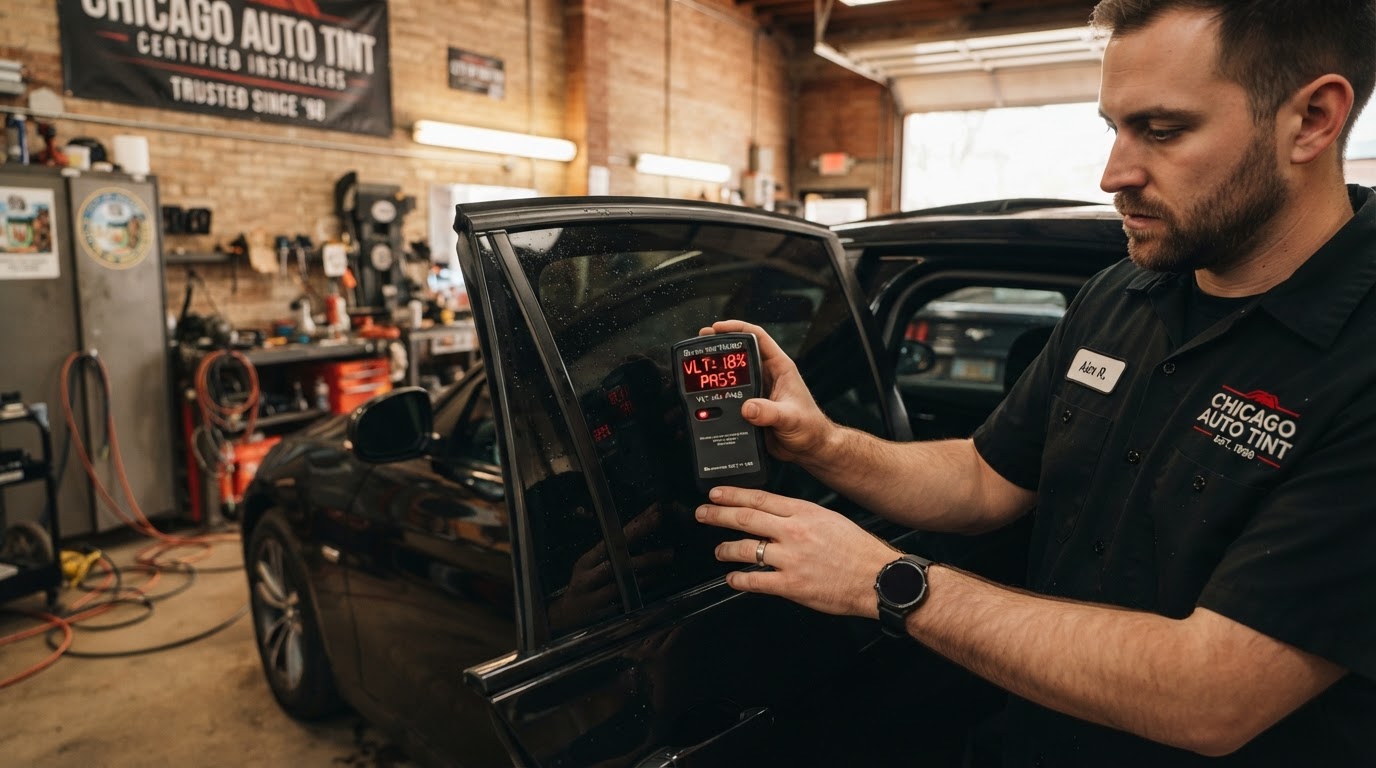
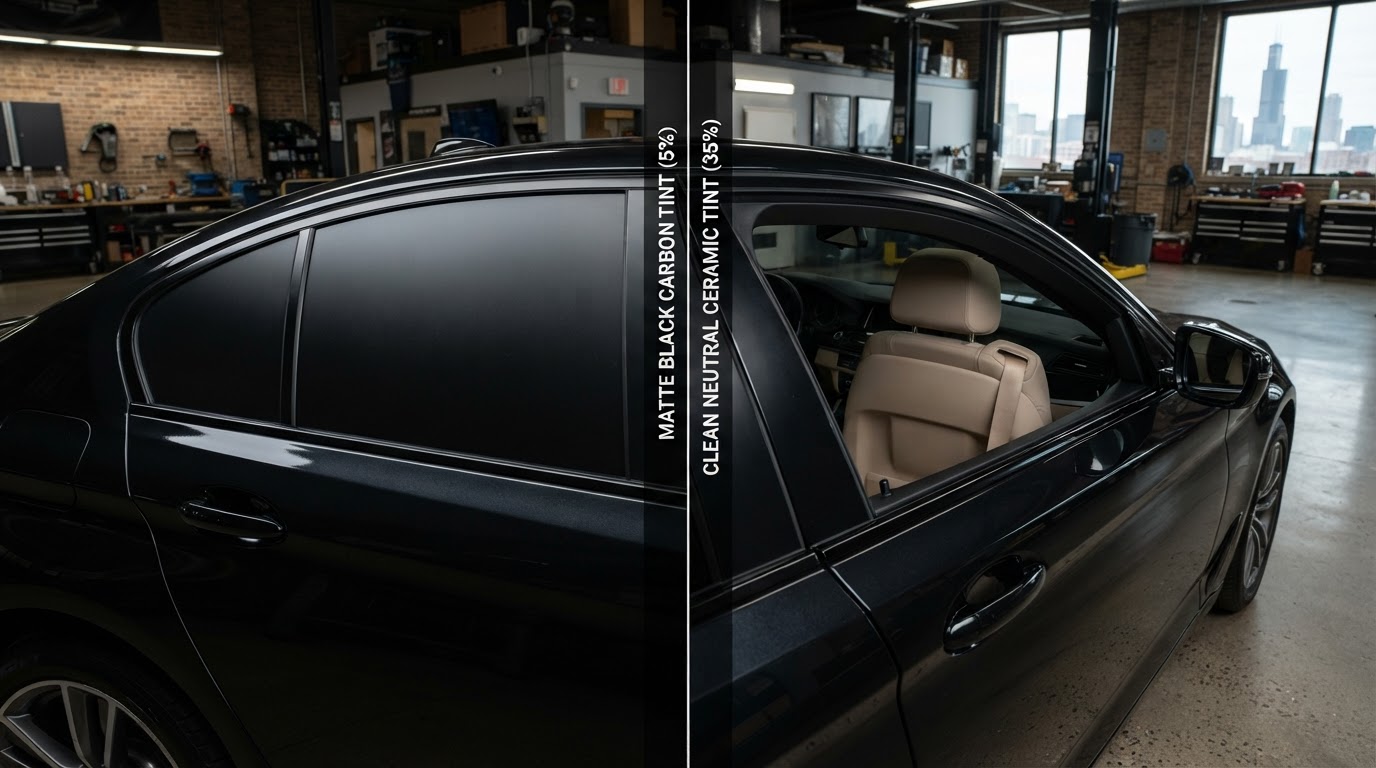
Visible light transmission (VLT) tells you how dark a film is. A lower number means a darker film. But VLT says nothing about how much heat the film blocks.
Heat performance is usually described by total solar energy rejected (TSER), and many films also list infrared rejection. A lighter film with strong infrared rejection can keep a car cooler than a darker film that only blocks visible light.
That's why film type matters. Ceramic films are built to target infrared heat without needing to go very dark, which is why many drivers choose them for comfort. Carbon films also offer solid heat performance and a clean, non-reflective look. Our carbon vs. ceramic guide breaks down the differences if you're deciding between them.
Does Heat Rejection Matter in Chicago?
It does. Summers here get hot and humid, and a car parked outside all day can get uncomfortable quickly. But heat isn't the only reason tint pays off in this city:
- Summer: less heat and a cooler cabin when you get back to your car
- Winter: reduced glare off snow and low sun
- All year: UV protection that helps keep your dash, seats, and trim from fading
How to Choose the Right Film for Heat
- Ask about heat rejection numbers, not just shade. Look at TSER and infrared rejection, not only the darkness percentage.
- Think about how you drive. If you park outside or commute on sunny roads, heat performance matters more.
- Check your local tint rules. Illinois limits how dark your front windows can be, so a film with strong heat rejection at a legal shade is often the smart pick.
- Choose a professional install. Even a great film performs poorly if it isn't applied cleanly.
Talk to the Team at Diversey Window Tinting
Not sure which film fits your car and your commute? Stop by Diversey Window Tinting in Chicago and we'll walk you through your options, from classic carbon to high-performance ceramic.
Frequently Asked Questions
Get Tint That's Legal and Looks Great
Call us at 773-692-6566 or request a free quote online. We'll keep your install within Illinois law. Walk-ins welcome · Se habla español.