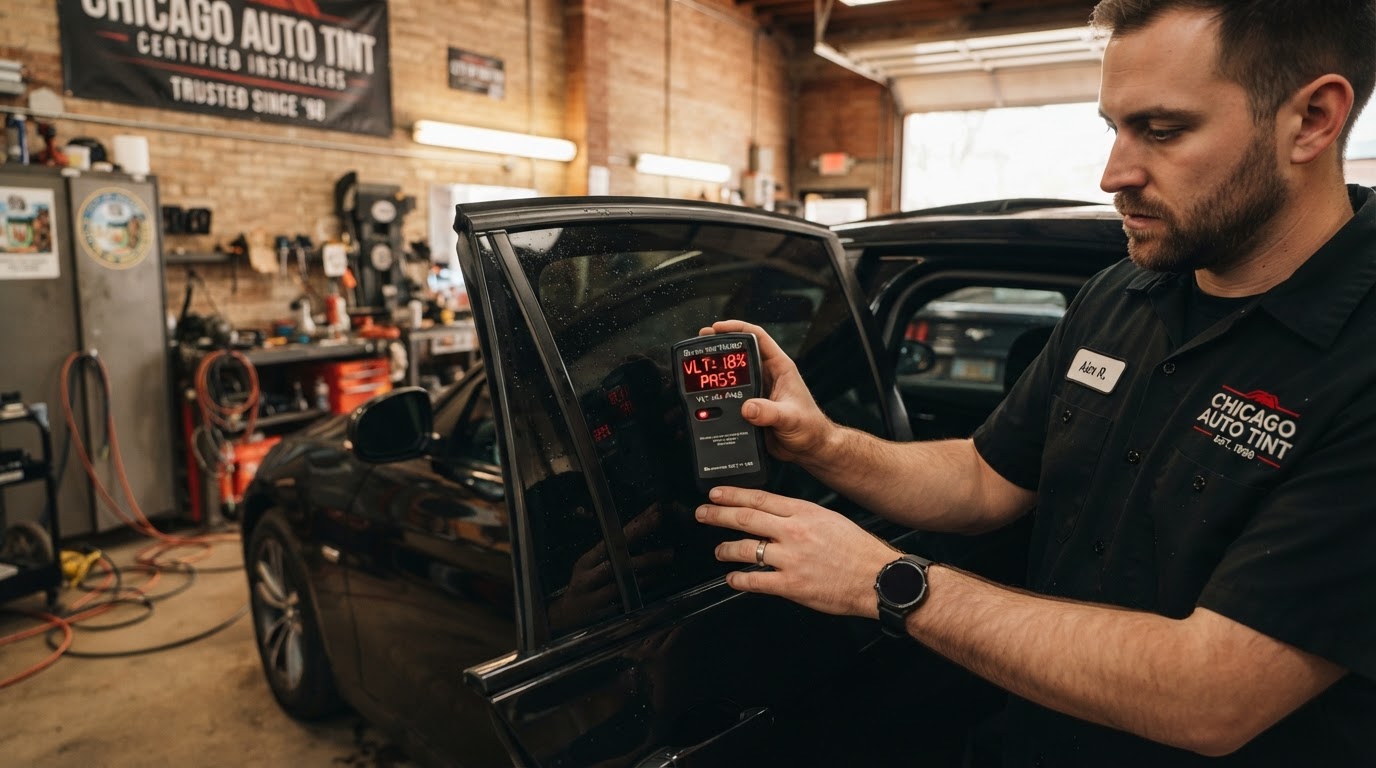
If you're shopping for window tint in Chicago, two film types come up again and again: carbon and ceramic. Both are a big step up from basic dyed film, and both look sharp on a car. But they work differently, and the right choice depends on how you drive, what you want from your tint, and how much comfort matters to you. Here's a straight comparison from the team at Diversey Window Tinting.
Carbon vs. Ceramic: What's the Real Difference?
Carbon and ceramic are both premium films, The difference is in how they're built and what they block. Carbon uses carbon particles to absorb heat and block light. Ceramic uses non-metallic nano-ceramic particles that reject infrared heat without needing to be dark. That single difference drives everything else — heat rejection, clarity, signal safety, and price.
What Is Carbon Window Tint?
Carbon film is made with carbon particles built into the film. Those particles block a good share of infrared heat, and they don't fade the way cheaper dyed films do, so you won't see that purple tint creeping in over the years.
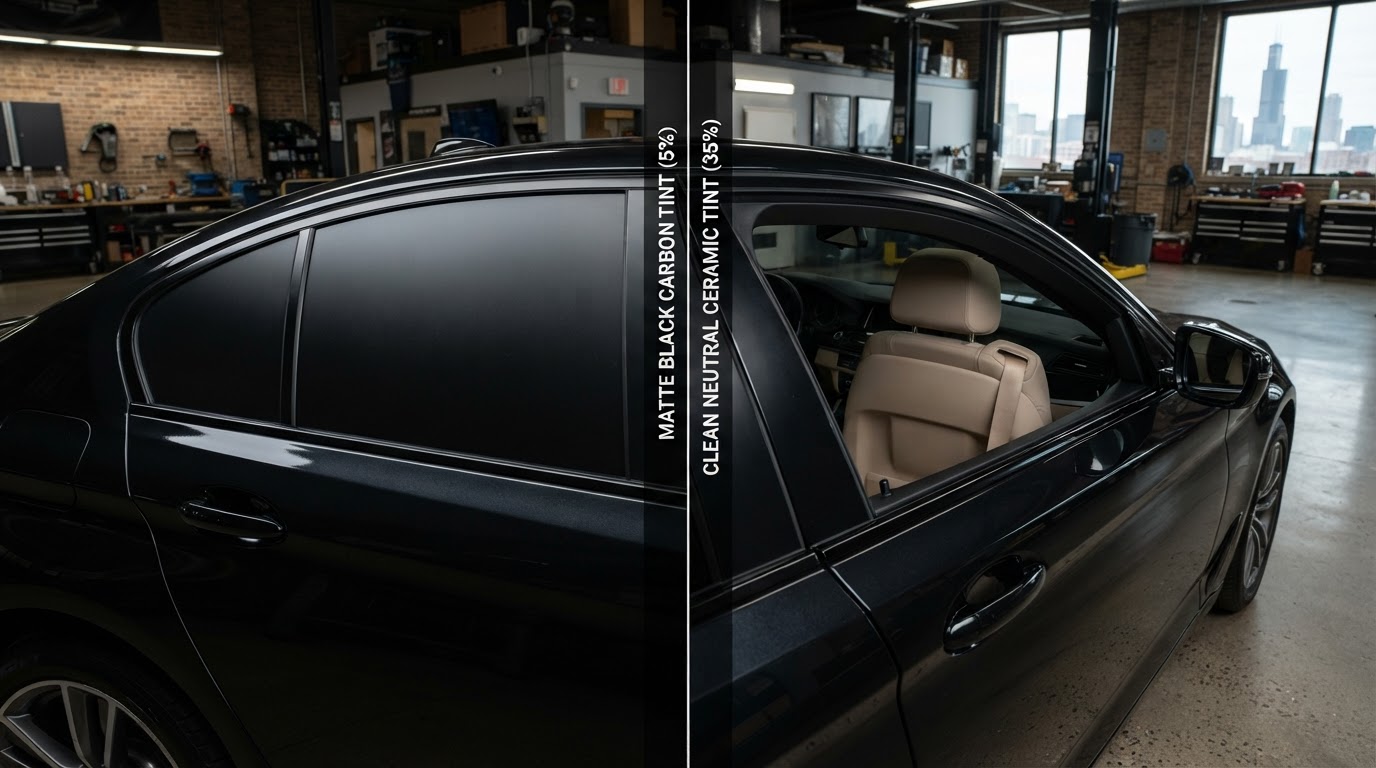
Carbon has a rich, matte finish that many drivers love. It's a strong all-around choice if you want a great look, solid heat control, and dependable durability.
What Is Ceramic Window Tint?
Ceramic film uses nano-ceramic particles that are non-metallic and non-conductive. That's the key to its performance. Ceramic is built to reject significantly more infrared heat than most other film types, and it does it without having to be very dark.
Because it's non-metallic, ceramic doesn't interfere with your cell signal, GPS, or radio. It also tends to offer the sharpest clarity, which makes a noticeable difference when you're driving at night.
Side-by-Side Comparison
Here's how carbon and ceramic stack up across the categories that matter most to Chicago drivers:
| Feature | Carbon | Ceramic |
|---|---|---|
| Heat rejection | Good to very good | Best available |
| UV protection | Excellent | Excellent |
| Fade resistance | Excellent, no purple shift | Excellent |
| Clarity & night visibility | Very good | Outstanding |
| Look | Matte, deep black | Clean, neutral |
| Signal interference | None | None |
| Investment | Moderate | Higher |
| Best for | Looks, value, daily driving | Max comfort & performance |
Which Is Better for Chicago Drivers?
Chicago summers can be hot and humid, and a car parked outside heats up fast. If you spend a lot of time in the car, commute on the Kennedy or Lake Shore Drive, or you're simply tired of climbing into a hot cabin, ceramic gives you the biggest drop in heat. It's also a smart pick if you want strong performance from a lighter shade.
Carbon is a great fit if you want a classic dark look with reliable heat reduction and long-lasting color. For many daily drivers, it's the right balance of performance and value.
Neither option is wrong. It comes down to what you value most.
Darker Doesn't Always Mean Cooler
A common myth is that a darker tint keeps your car cooler. In reality, heat is mostly carried by infrared light, which you can't see. A lighter ceramic film can block more heat than a darker film of another type. That also matters here in Illinois, where the state limits how dark your tint can be. You can pick the shade that keeps you legal and still get strong heat rejection from the film itself.
Why Installation Matters as Much as the Film
Even the best film performs poorly if it's installed badly. Dust, bubbles, and crooked edges ruin the look and shorten the life of the tint. Our installers prep each window carefully, cut and fit the film precisely, and check the finished job before you drive away.
Not Sure Which to Choose? We'll Help.
Tell us how you drive and what you want from your tint, and we'll recommend the right film for your car. Stop by one of our Chicago locations on Diversey, Armitage, or Kedzie, call us at 773-692-6566, or reach out through diverseywindowtints.com for a quote.
Frequently Asked Questions
Get Tint That's Legal and Looks Great
Call us at 773-692-6566 or request a free quote online. We'll keep your install within Illinois law. Walk-ins welcome · Se habla español.